
Science in the future might even speak Creole.
by Andreas Roepstorff
The kinds of science we are talking about may look somewhat different from what we knew in the 20th century.
One of the human rights is the right to reap the benefits of science. But it also seems that, from the discussion we’ve had here, the kind of science we are talking about may look somewhat different from what we knew in the 20th century: It’s participatory, it acknowledges that science is also political and embedded in structures, and it might even speak Creole (which is remarkable as for most scientists today, the idea is that you should speak a clear, clean language).
From a diplomacy point of view, we are clearly living in a multipolar world. This is the kind of world that we need to engage with. We don’t know exactly how many poles are going to be there. We don’t know exactly what it even means to be a pole in that world, but it’s more than one, and it’s more than two, whatever the state of affairs may be. So, that’s the challenge on the diplomacy side.
And it seems that the challenge on the science side, on the research side, is that it has to be a multi-perspectival science that somehow exists in this world. It’s a science where, whatever topic you’re looking at, different perspectives somehow need to coexist without it falling into any kind of absolute relativism. And I think that is a challenge for us as researchers: to figure out how we live with that kind of perspectivism that is both carried by people and by different traditions.
I think the challenge that you give is not just a challenge to the diplomats. It’s also a challenge to the researchers, to figure out what science would look like under those circumstances, where we are living in a multi-perspectival, multipolar world.
But the alternative to thinking through science seems not to be a good one.
Andreas Roepstorff
Andreas Roepstorff is Director of the Aarhus Institute of Advanced Studies (AIAS). He is affiliated with Aarhus University in Denmark and has contributed extensively to the field of psychology, with a primary focus on experimental and cognitive psychology.
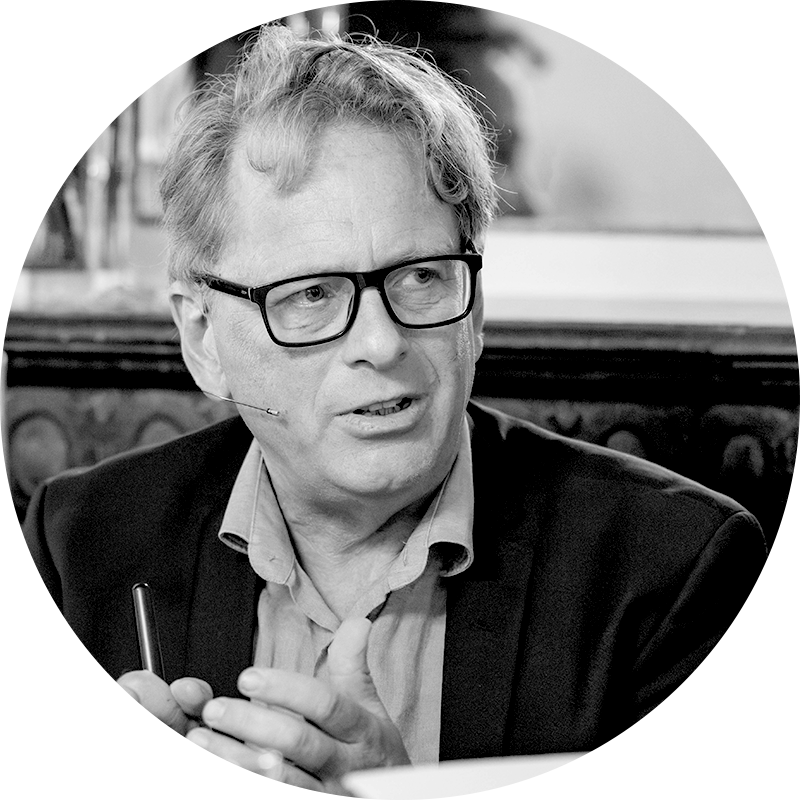
Image Information
Portrait: © Elio Germani 2026