
If we don’t engage and articulate our positions properly, we get neglected and are seen as small change.
by John Gyapong
All the issues in terms of the disruptions are much more present on the African continent than in Europe and other places. But our concern is that, in many of the discussions, the issues about Africa become more of an afterthought than being at the centre of the co-creation of the solutions that we are looking out for. We end up in the small print. After everything has been talked about, then they ask: What about Africa?
I guess maybe we also haven’t been proactive enough in raising the issues from our perspective. And the truth is that unless you speak, nobody speaks for you. Or, when they speak for you, they may not represent you the way you would want to be represented. I have seen the data out there which tends to indicate that Africa contributes less than one percent of scientific knowledge. But whose definition is that? And that has become the narrative, that is what everybody speaks to.
When it comes to many of the issues about linguistics and epistemology and all that, we tend not to look at it from our perspective. Probably because we have not described it from our own position. I think that we, as the African continent, need to step back and begin to articulate the issues from our own perspective. And we need to see many of these issues as coming from multipolar perspectives, so that our point of view can also be around the table during the discussion. If we don’t engage and articulate our positions properly, we get neglected and are seen as small change.
John Owusu Gyapong
John Owusu Gyapong is a Ghanaian public health physician, clinical epidemiologist, and academic leader. He was the vice chancellor of the University of Health and Allied Sciences, in Ho, Ghana, from 2016 to 2022. He is currently the Secretary-General of the African Research Universities Alliance (ARUA) where he works to advance research excellence, strengthen collaboration among African universities, expand international partnerships, and improve postgraduate research training.
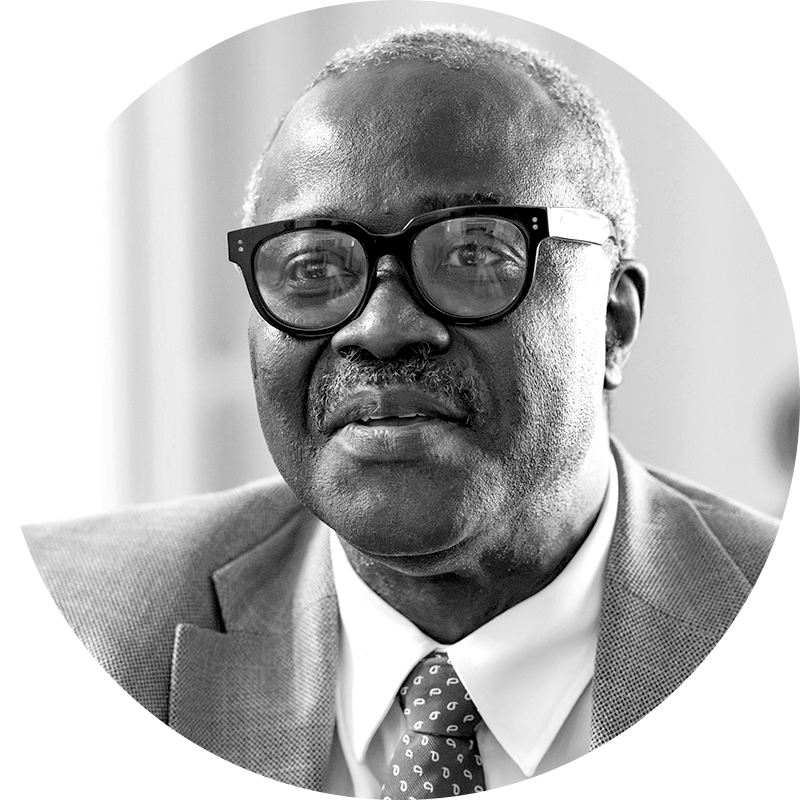
Image Information
Portrait: © Elio Germani 2026