
A New Metaphor for Science & Diplomacy.
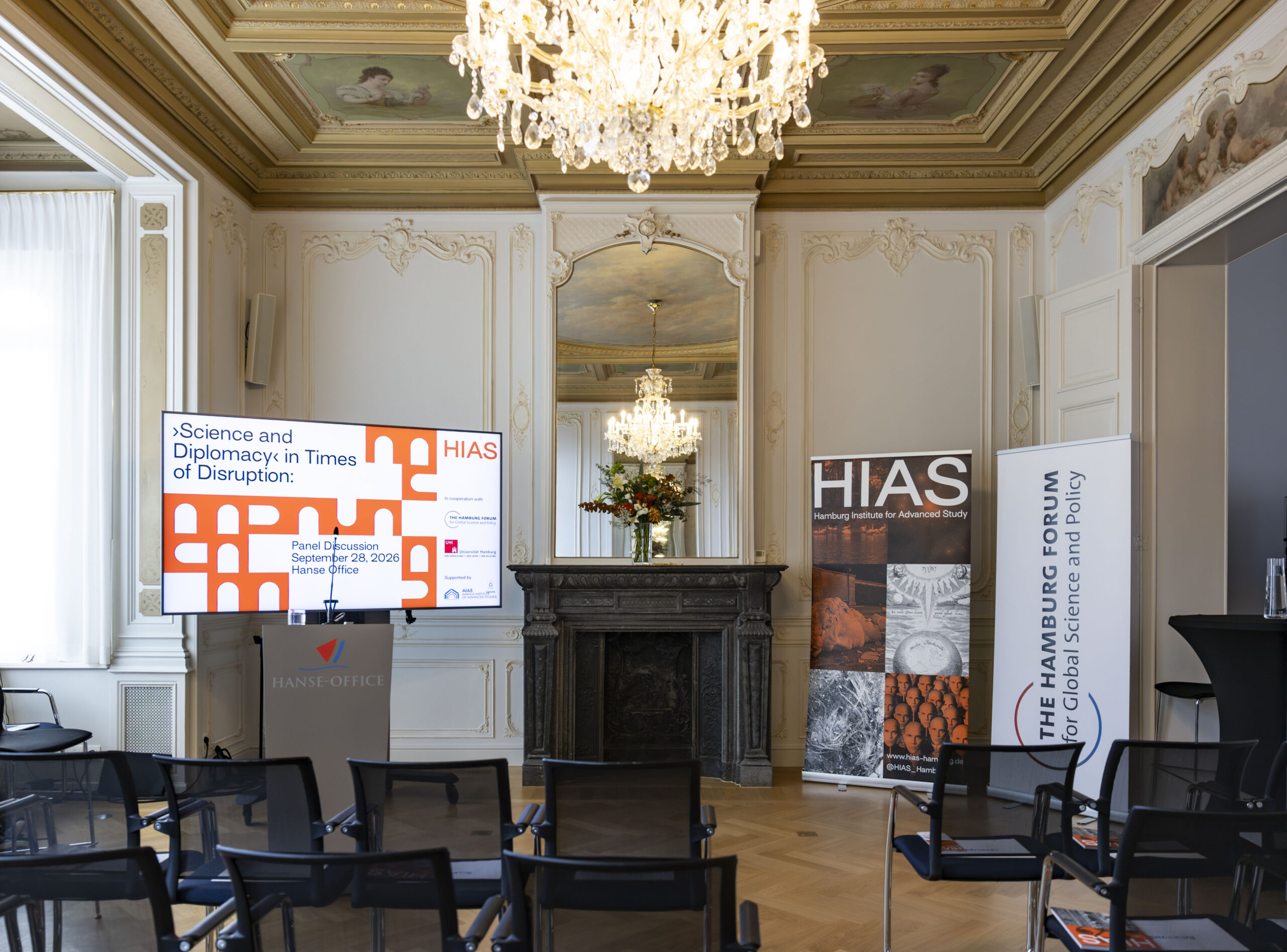
Highly productive and thought-provoking – such was, thanks to a panel of outstanding experts and a lively discussion with high-level guests, the result of the exchange on the challenges for research institutions in view of a rapidly changing geopolitical context. The debate on ‘Science and Diplomacy’ in Times of Disruption: How Must International Research Institutions…
Are we – as scientists – pushing ourselves enough to really bring about fundamental change?
by Jan Palmowski This panel started with the premise of the international rules-based order and how we can use this to do science diplomacy better. But Mark Carney, as he reminded us in Davos, said that, in truth, this international rules-based order was also deeply imperfect. And so, if we think about that extended dimension—about…
Science in the future might even speak Creole.
by Andreas Roepstorff The kinds of science we are talking about may look somewhat different from what we knew in the 20th century. One of the human rights is the right to reap the benefits of science. But it also seems that, from the discussion we’ve had here, the kind of science we are talking…
For Europe, it is a strategic move to cooperate equitably with Africa and with other regions, including Latin America. Because without talent, you can’t do much.
by Marcelo Knobel I think there are two essential components that we should put on the table. The first is talent. We have to remember that science is not made only of resources. We also need talent to do it. And in a few years, the vast majority of the younger population will be in…
Science Diplomacy acts as a kind of damper today.
by Maria Rentetzi In the past, we have used the metaphor that science diplomacy builds bridges. However, I would like to propose a new metaphor: that science diplomacy acts as a kind of damper today. The whole discussion we’re having today – we are going through times of disruption – is not there for the…
If your institution doesn’t have the capacity set up for research security, you either over-regulate out of fear, or you accept under-protection out of naivety.
by Frank Lehner If your institution doesn’t have the capacity set up for research security, you either over-regulate out of fear, or you accept under-protection out of naivety. Institutions have to find a balance. Research security has moved into the centre of attention of our daily life at facilities like DESY. Everything which is needed…
Issues relating to Africa become more of an afterthought rather than being at the centre of the co-creation of the solutions that we are looking out for. We end up in the small print.
by John Gyapong Only after everything has been talked about, the question comes up: What about Africa? Maybe we also haven’t been proactive in raising the issues from our perspective. The truth is that – unless you speak, nobody speaks for you. Or, when they speak for you, they may not represent you the way…
We must ensure that science remains open. This is really crucial.
by Nela Rhiehl From my discussions with academics, I would like to reiterate what has been said here in this panel: We must ensure that science remains open. This is really crucial. I would like to stress the importance of Erasmus Plus, a program you all know. It is one of the strongest science diplomacy…
Institutes for Advanced Study have a natural tendency to practice science diplomacy.
by Christian Suhm A couple of months ago, HIAS joined the EU Science Diplomacy Alliance. From the European angle, and with respect to the recently published and adopted European Framework or Science Diplomacy, it seems worthy to highlight two aspects of the science diplomacy work that Institutes for Advanced Study on our continent do. First,…
We want science to act as a sparring partner and an enabler for informed decision-making in politics and society.
by Tilo Böhmann Today’s world is shaped by complex global crises—geopolitical conflicts, systemic competition, societal polarization, and hostility toward science. We believe that universities must provide space for scientific reflection and dialogue on these challenges. That is why we have established international conference formats, such as the Hamburg Forum for Global Science and Policy, bringing…